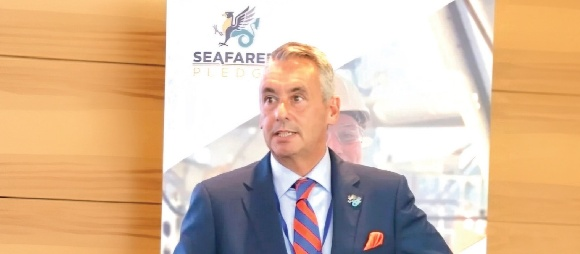
ShipMoney is proud to have signed the Seafarer Pledge, a commitment to recognise, respect and support the seafarers who keep global trade moving. To mark the occasion, we invited Steven Jones, founder of the Pledge to share the thinking behind it and what he hopes it will achieve for the maritime industry.
Why a Seafarer Pledge Matters
People often ask where the Seafarer Pledge came from. The answer is simple: experience. My own experience of going to sea, growing up in a seafaring family, and then coming ashore to build a second career. Like many former seafarers, I discovered that people often did not understand what it meant to have been at sea. They valued the goods that ships delivered but rarely recognised the people who made it happen, or the extraordinary skills that a life at sea develops.
The seed was planted when the Propeller Club Liverpool signed the UK Armed Forces Covenant. We were proud to do so, but it prompted an obvious question: why wasn't there something similar for merchant seafarers and others whose working lives are spent at sea? Here was an entire profession that underpins global trade, yet there was no simple, public way for organisations to say, “We recognise you. We value what you do.”
The more people I spoke to, the clearer it became that this wasn’t about creating another compliance framework or accreditation scheme. It was about recognition. Sometimes we underestimate just how powerful that can be. Before organisations can improve culture, they first have to acknowledge the people who make that culture possible.
The Pledge evolved through the support of the Merchant Navy Welfare Board, particularly Sharon Coveney, its Deputy Chief Executive. Together with Trinity House and the Merchant Navy Association, they helped launch a pilot that turned the idea into a growing movement.
Early surveys and roundtable discussions challenged some original assumptions and encouraged us to broaden the language. The Pledge became stronger because it was shaped by listening.
Seafarers often describe feeling forgotten the moment they step ashore, not just because of practical issues like limited shore leave or poor connectivity, but because they feel invisible. The public depends on them every day while rarely thinking about them at all.
This lack of visibility continues after a seafaring career ends. Former seafarers bring exceptional qualities to shore-based roles: leadership, resilience, technical expertise, calm decision-making under pressure, multicultural teamwork, and problem-solving in demanding environments. Yet these strengths are often overlooked because employers do not fully understand life at sea. The issue is not a lack of transferable skills, but a lack of recognition and understanding.
That is why the Pledge deliberately avoids becoming another bureaucratic exercise. We wanted something organisations genuinely wanted to join. Once people publicly commit, conversations begin, ideas develop, and good practice spreads. Meaningful cultural change can start with a simple statement of intent.
It has been encouraging to see maritime organisations embracing this philosophy. My hope is that the Pledge becomes widely recognised across the maritime community.
For organisations such as ShipMoney, the opportunity is clear. You may not employ seafarers directly, but you are part of their everyday lives. Financial services affect how easily they support families, access earnings, and manage life across countries and currencies. Every interaction signals whether they are valued professionals or just another transaction. The Pledge is for every organisation whose work touches those at sea and those who have moved ashore, it offers a chance to build on what you already do well.
Success will not be measured simply by signatures. In three or four years, I hope to see employers recognising seafaring experience in recruitment, ports visibly welcoming crews, businesses supporting those at sea more thoughtfully, and former seafarers finding their skills genuinely understood and valued. With retired seafarers feeling valued and welcomed too.
While many industry challenges are practical, the deepest are human. People want to feel respected, to know their contribution matters, and that someone notices.
The Seafarer Pledge is a modest idea. It will not solve every challenge, nor does it pretend to. But every meaningful change starts somewhere. If the Pledge helps ensure seafarers are seen, respected, valued, and celebrated for their extraordinary contribution, it will have achieved exactly what it was created to do.
Sign up today The Seafarer Pledge - Merchant Navy Welfare Board
Steven Jones
Seafarer Pledge Leader